
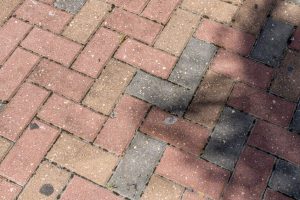
Brick pavers can add rich color and character to patios, walkways, driveways, and other outdoor spaces, but over time, that appearance can begin to change. Homeowners may notice that the surface looks dull, faded, cloudy, or even covered with a white haze.
Some of these changes are caused by ordinary outdoor buildup, while others may be connected to moisture, old sealer, or the finish previously applied to the pavers. Understanding the difference can help determine whether the surface simply needs brick paver cleaning or more involved restoration.
Dirt and Outdoor Buildup Can Dull the Surface
One of the simplest reasons brick pavers lose their color is everyday exposure to the outdoors. Dust, pollen, soil, leaves, moss, and other debris can gradually collect on the surface.
As that buildup increases, the natural color of the bricks may become harder to see. Shaded or damp areas can be especially prone to moss or organic growth, leaving sections looking darker or greener than the rest.
A professional cleaning can often make a noticeable difference when surface buildup is the main problem.
Sun and Weather Can Change the Appearance Over Time
Pavers are also constantly exposed to sunlight, rain, snow, and changing temperatures. Over the years, that exposure can contribute to fading and an uneven appearance.
Areas that receive direct sunlight may look different from shaded sections, while frequently wet areas may develop staining or organic growth. This can create a patchy look even when the pavers are otherwise in good condition.
Routine brick paver maintenance can help keep seasonal buildup from making these changes even more noticeable.
What Causes a White or Cloudy Haze?
A white or milky appearance can be more complicated than ordinary dirt. In some cases, a powdery white residue may be efflorescence, which occurs when moisture moves through masonry materials and brings mineral salts to the surface.
A cloudy appearance beneath an existing sealer may have a different cause. Moisture can sometimes become trapped beneath a film-forming finish, creating a hazy or milky appearance. Problems can also occur when too much sealer is applied or when a new coating does not work well with an older finish already on the surface.
Because several different issues can look similar, white discoloration should be evaluated before assuming it can simply be washed away.
Old or Failing Sealer Can Affect the Finish
Sealer is intended to protect pavers and, depending on the product, enhance their natural color. But coatings do not last forever.
As an older finish wears, homeowners may notice dull patches, uneven color, peeling, cloudiness, or areas with varying levels of shine. Applying another coating over a failing or incompatible finish can sometimes make the appearance worse rather than improve it.
This is why proper surface preparation is an important part of brick paver restoration.
Not Every Discoloration Problem Has the Same Solution
When pavers look dirty, professional cleaning may be all that is needed. When the issue is related to failing joint material or a worn finish, re-sanding or sealing may also be appropriate.
Haze beneath a coating is different from dirt sitting on top of the brick, so simply power washing the surface may not correct every appearance problem. Identifying whether the discoloration is caused by buildup, moisture, mineral deposits, or an existing finish can help determine the right next step.
Restore the Natural Look of Your Pavers
Dullness, discoloration, and white haze do not always mean the brick itself is damaged. In many cases, the appearance has changed because of outdoor buildup, weather exposure, moisture, or an aging finish.
At Mr. Clean Powerwashing, we provide professional brick paver cleaning and restoration services throughout Michigan, including cleaning, re-sanding, sealing, and other restoration options based on the condition of the surface. If your patio, walkway, or driveway is looking faded, cloudy, or uneven in color, contact us to discuss your pavers and the best way to refresh their appearance.
Leave a Reply
You must be logged in to post a comment.